



HD Full-range Pay-off Stands for Single Twist Cabling | Custom Solutions for Smart Cable Manufacturing
 May 13, 2026|
 View:279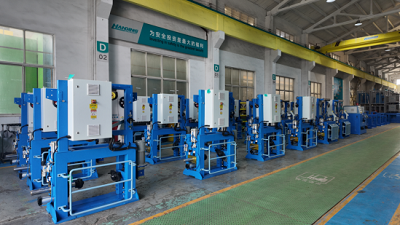
Introduction
In single twist cabling production, front-end feeding stability directly determines final cable quality, output efficiency, and line continuity. Pay-off Stands are the foundational equipment that holds, unwinds, and feeds wire reels to the twisting machine. Poor Pay-off Stands often cause unstable tension, wire scratches, frequent reel change downtime, and inconsistent stranding—common pain points that reduce yield and raise costs.
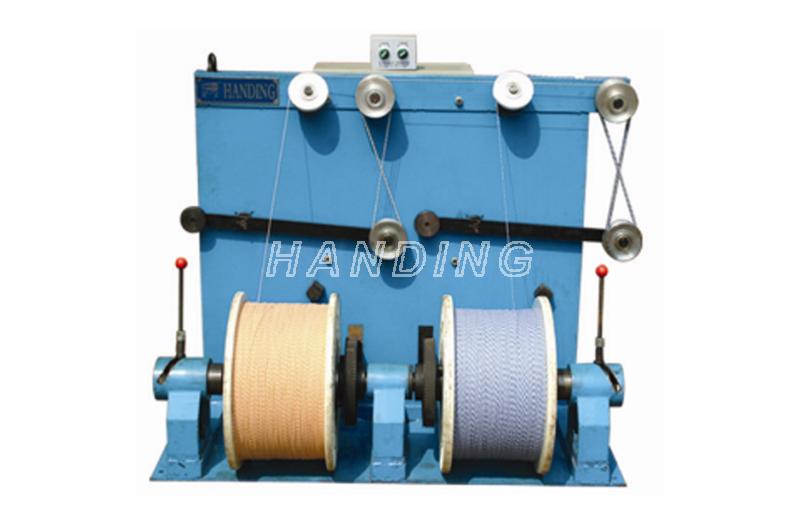
Jiangsu Handing focuses on the core single twist cabling process and independently develops a full line of dedicated Pay-off Stands. The portfolio includes cantilever, shaftless, active, and passive models, built on modular mechanical design and intelligent PLC control. With tailored engineering and reliable build quality, Handing Full-range Pay-off Stands precisely match diverse production scenarios, delivering stable, efficient, and low-maintenance feeding support. They help cable manufacturers improve quality, boost efficiency, and upgrade to intelligent manufacturing.
1. Full Product Coverage: Diverse Pay-off Stands for All Production Scenarios
Traditional feeding equipment often suffers from limited reel compatibility, fixed tension modes, and difficult loading. Handing builds a comprehensive Pay-off Stands product matrix that covers mainstream structures and control types, breaking adaptation limits and meeting differentiated production demands.
1.1 Cantilever Pay-off Stands
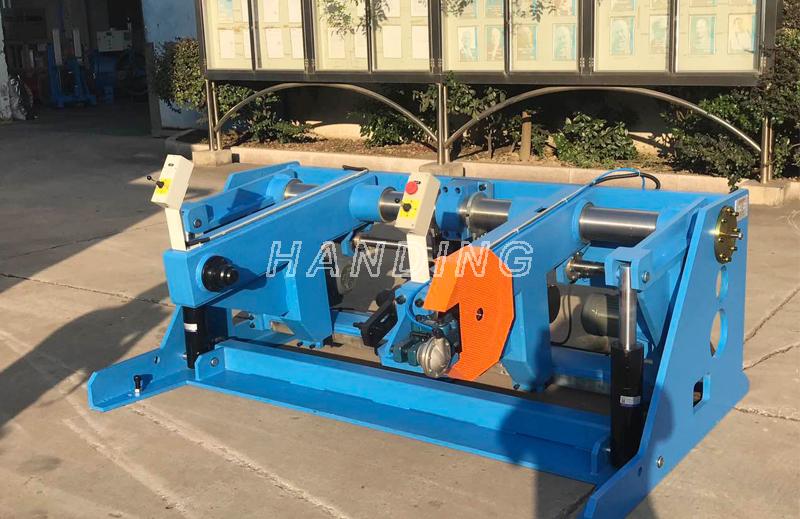
Open cantilever frame with no side obstructions, providing wide access for operators.
Compatible with reel sizes Φ630 mm to Φ1250 mm.
Fast reel replacement and straightforward maintenance.
Ideal for medium-fine to medium-thick wires; widely used for control cables, communication cables, and general power cables.
Best fit: conventional single twist lines requiring easy operation and low cost.
1.2 Shaftless Pay-off Stands
Shaftless design with thimble clamping mechanism; reel sits directly on the floor.
No hoisting equipment needed for loading/unloading; reel change efficiency improved by 50%+.
Heavy-duty frame and stable transmission for large reel weights and long runs.
Suited for heavy reels and high-speed continuous production in industrial cable manufacturing.
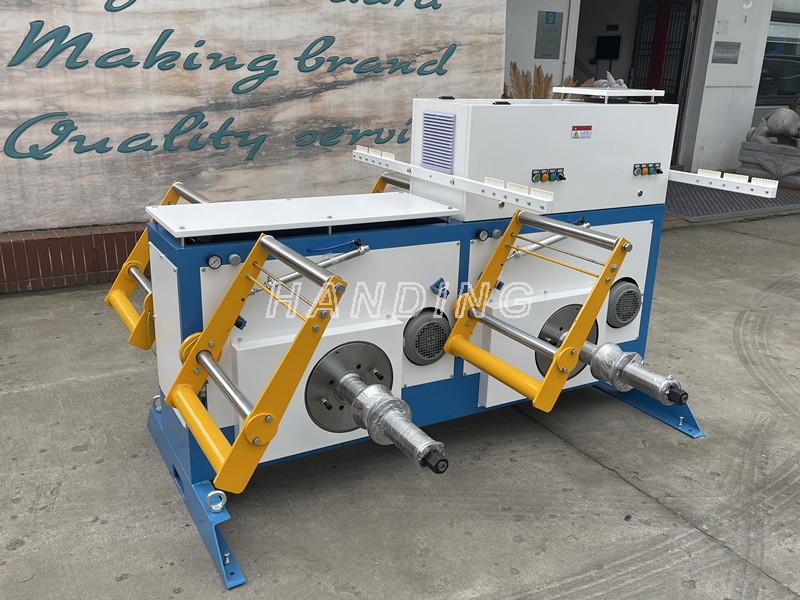
1.3 Active / Passive Pay-off Stands
Equipped with VFD + servo control.
Stepless speed: 0–300 m/min.
Stable power output and precise tension; perfect for high-precision, high-speed stranding (data cables, electronic wires).
Passive Pay-off Stands:
Magnetic powder tension control.
Simple structure, cost-effective, easy tension adjustment.
Meets conventional low-speed production requirements.
Dual configuration covers low to high speed and standard to high-precision production needs.
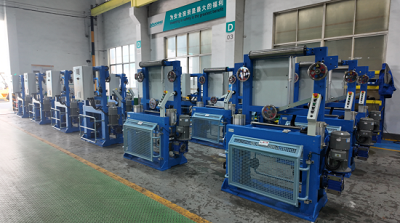
2. Strong Customization: Pay-off Stands Tailored to Your Production Parameters
Every cable plant has unique reel specs, wire materials, speeds, and process tolerances. Standard Pay-off Stands often force compromises. Handing designs every Pay-off Stands for non-standard customization, matching your actual conditions exactly.
2.1 Precise Reel Specification Matching
Fits Φ630 mm to Φ1250 mm reels.
Custom clamping/positioning for different flange diameters and widths.
Quick reel swaps without extra modification.
2.2 Multi-Material Wire Adaptation
Custom tension curves and guide wheel assemblies for:
Copper/aluminum conductors (prevent stretching/deformation).
PVC/PE insulated wires (avoid surface scratches).
Ensures wire integrity and consistent electrical/mechanical performance.
2.3 Capacity & Process Scenario Adaptation
Customized solutions based on:
Daily output and line speed.
Stranding count, pitch accuracy, and synchronous taping.
Options: multi-head pay-off, double-station continuous pay-off.
Seamless connection with cantilever and suspended-frame single twist machines for fully automated lines.
3. High-Precision Control: Stable Feeding Ensures Cabling Quality & Efficiency
As the core front-end equipment, Pay-off Stands directly affect stranding uniformity, conductor roundness, and finished yield. Handing Pay-off Stands integrate synchronous linkage and constant tension control to eliminate feeding-related failures at the source.
3.1 Real-Time Synchronous Linkage Prevents Production Failures
PLC intelligent control system on all Handing Pay-off Stands.
Pay-off speed communicates and synchronizes with the single twist main unit.
Dynamically matches stranding speed; prevents:
Wire thinning / breakage
Strand jumping / loosening
Reduces scrap rate and unplanned downtime.
3.2 Precise Constant Tension Control Guarantees Cabling Accuracy
High-end models: Servo tension control, error within ±0.5%.
Standard models: Magnetic powder tension regulators for stable, adjustable tension.
Benefits:
Uniform tension per wire
Stable stranding pitch
Consistent conductor roundness
Meets high-end requirements for high-frequency data cables, precision electronic wires, and premium control cables.
3.3 Intelligent Safety Protection Reduces O&M Costs
Integrated safety functions:
Wire breakage detection
Fixed-length automatic shutdown
Emergency braking
Real-time monitoring; auto-alarm and stop on abnormalities to avoid collisions and wire damage.
Modular design simplifies maintenance; key parts use wear-resistant materials for longer service life.
Greatly lowers operation and maintenance costs and shutdown risks.
4. FAQ
Q1: What is the main role of Pay-off Stands in single twist cabling?
A:Pay-off Stands hold wire reels and feed wire to the single twist machine at a controlled speed and tension. Stable feeding ensures even stranding, consistent pitch, and high-quality finished cables while reducing breaks and scrap.
Q2: How do I choose between cantilever and shaftless Pay-off Stands?
A:
- Choose cantilever for: medium–light reels (Φ630–1250 mm), easy maintenance, conventional control/communication cables, lower budget.
- Choose shaftless for: heavy reels, frequent reel changes (50%+ faster), high-speed continuous industrial lines, no hoisting equipment on site.
Q3: What is the difference between active and passive Pay-off Stands?
A:
- Active: Motor-driven (VFD/servo), 0–300 m/min, precise tension, for high-speed/high-precision lines (data cables, electronic wires).
- Passive: Magnetic powder tension, lower cost, simple, for conventional low-speed cabling.
Q4: Can Handing customize Pay-off Stands for non-standard reel sizes?
A: Yes. Handing Pay-off Stands support full customization for reel flange diameter, width, and weight. We design dedicated clamping and positioning mechanisms for fast, tool-less reel changes.
Q5: How does tension control affect final cable quality?
A: Unstable tension causes uneven stranding, varying pitch, conductor deformation, and insulation scratches. Handing Pay-off Stands maintain constant tension (±0.5% on high-end models), ensuring uniform stranding, stable pitch, and reliable electrical/mechanical properties.
Q6: Are Pay-off Stands easy to maintain?
A: Yes. Handing uses modular design and wear-resistant components. Daily maintenance includes guide wheel inspection, tension calibration, and lubrication. Wear parts are easy to replace, minimizing downtime.
Conclusion
From standard models to fully customized solutions, from conventional cabling to high-end intelligent manufacturing, Handing Pay-off Stands deliver three core strengths: complete product coverage, powerful customization, and high-precision intelligent control. They are the reliable front-end feeding choice for single twist cabling processes.
In the future, Jiangsu Handing Cable Equipment will continue deepening technological innovation and optimizing Pay-off Stands performance. With superior equipment and professional service, we help global cable manufacturers improve production efficiency, consolidate product quality, and build a smarter future for the cable industry.

Recent News
1.Handing 90+45mm Extruder Successfully Shipped to Customer
2026-05-112.Extrusion Machine for Copper Wire: The Complete 2026 Buyer's & User's Guide
2026-05-083.Handing T500-H Horizontal High-Speed Six-Layer Taping Machine Successfully Shipped
2026-04-294. BP-630 Box-Type Active Pay-Off Rack Heads Overseas to Boost Cable Manufacturing Efficiency
2026-04-245.Handing Cable Equipment’s EXT90+90-26DS Double-Layer Co-Extruder Exported Overseas
2026-04-296.Handing DTE-1250D Bunching Machine Exported Overseas
2026-04-177.Handing 90+45mm Extruder Production Line Undergoes Performance Inspection, Empowering Wire and Cable Production to Start A New Journey
2026-04-20